Travnik and Jajce Waterfall Tour is a lovely full-day tour from Sarajevo.
In this tour you will explore central Bosnia with and its two most beautiful, and historicly most important towns.
We will discover vizier town Travnik, it’s beautiful fortress, „Blue Water“ and other attractions in this town with your guide
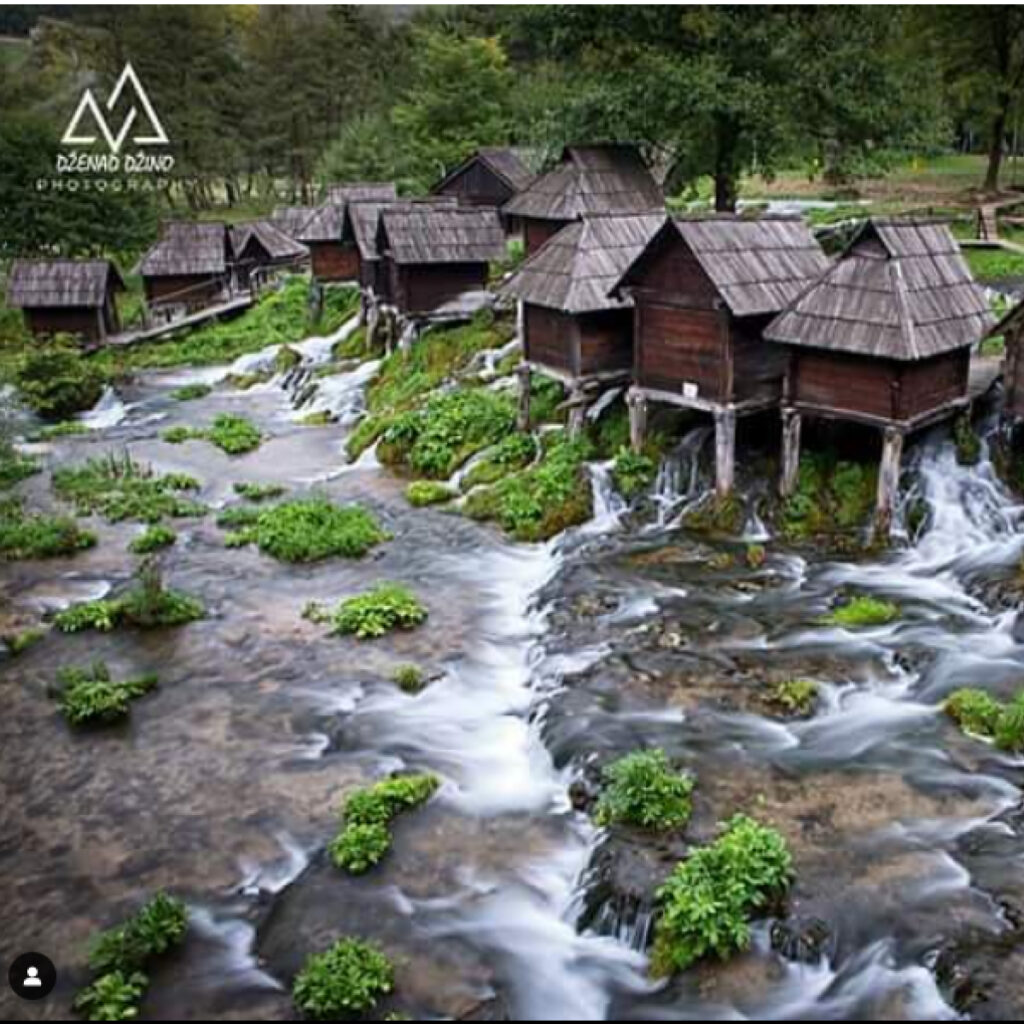
Later on we will explore a royal town – Jajce and its medieval catacombs. We will enjoy one of the most beautiful waterfalls in our country – Jajce Waterfall and discover incredible Pliva Watermills and Pliva Lakes.
Tour pricing
Single ticket
65€/per person
Tour timetable
Departure & return location: Meet Bosnia Tours agency – at the crossroads of Gazi Husrev Begova 75, Mula Mustafe Bašeskije, Sarajevo 71000, or we can pick you up at your hotel. (See on maps)
Departure time: 08:00 AM
Tour highlights
Travnik Fortress
Ivo Andric’s House
Jajce medieval Catacombs
Bosnian coffe nearby Bluewater in Travnik
Jajce Waterfall
Pliva Lakes
Itinerary
Travnik- vizier city
In the first place, on the road towards the west, we will go to Travnik, which for many years served as the capital of the Bosnian eyalet and was known as Vizier City. In the Ottoman Empire, the Grand Vizier was the prime minister of the Ottoman Sultan.
This enchanting town is also the birthplace of Ivo Andric, a Yugoslav novelist, and the 1961 winner of the Nobel Prize in Literature.
Travnik is one of the best-preserved cities from Ottoman times. There are 28 protected cultural and historical buildings in this area.
Definitely, the most important of them is the medieval fortress, built in the 15th century, the Jeni mosque, which is the oldest building from the Ottoman period, the Sulejmanija or Šarena mosque, the Jesuit Grammar School and the Elči Ibrahim-Pasha madrassa – a Muslim school that is still used today. Moreover, there are also two clock towers built in the 18th century, as well as a sundial, built in 1886.
In addition, this charming town has a lovely small river that we call Plava Voda or Blue Water, located right in the city centre. A nice and iconic café is near the river where they serve the best Bosnian coffee you can taste.
At the same place, Franz Joseph tasted his best coffee, paying for it with a golden coin. Likewise, in the mountains above the town, locals make the famous Travnik cheese.
All over Travnik, you can see traditional Bosnian houses as well as a medieval fortress overlooking the city.
Jajce
After visiting Travnik, we will continue to Jajce, the capital of the independent medieval Kingdom of Bosnia. The medieval stone smiths built the royal castle, town-museum under the open sky, on the banks of the rivers Pliva and Vrbas.
Once you are there, you get the feeling of the mysterious history of the place, and you will rush to get to know it better. The old city of Jajce is a candidate for a UNESCO World Heritage site.
Our guide will show you the most prominent part of the city, its trademark, the magnificent, 18-meter-high waterfall. It’s a place where the river Pliva tumbles abruptly into the Vrbas river.
Jajce waterfall dominates the centre of the Old Town, which makes this place unique. For sure, it will take your breath away. If you are a bit luckier, you can visit during the Summer Festival when a diving competition takes place next to Jajce waterfalls.
This small space enables you to glance at four empires: Roman, Byzantine, Ottoman and Austro-Hungarian, three kingdoms: Bosnian, Hungarian and Yugoslav, three world monotheistic religions: Christianity (Orthodoxy and Catholicism), Islam and Judaism, and different architectural styles.
Jajce Fortress, with its long defensive wall, was the stronghold of the city, a former royal capital and the last territorial possession of the Kingdom of Bosnia. It’s one of the most recognisable symbols of Jajce, built back in the 13th century. Today, the fortress provides breathtaking views of the surroundings and pleasant walks along the ramparts.
Jajce – the capital of Bosnian Medieval Kingdom
Located inside the defensive city walls of Jajce are the medieval Catacombs, a monument of particular value and importance. At the end of the 14th century, when the town was experiencing major political and cultural development, the mighty Bosnian duke ordered that these catacombs be built in the granite rocks as a place of the last residence for himself and the ducal family.
Josip Broz Tito stayed and worked in the catacombs during a short period of WWII. In 2003, the Commission for the Protection of National Monuments of Bosnia and Herzegovina registered the Catacombs as a national monument.
Jajce is an important city in Yugoslav history since the Second Conference of the Anti-Fascist Council of National Liberation of Yugoslavia (AVNOJ) was held there. Also, we will visit the symbol of coexistence in Jajce, the Church of St. Mary or the Sultan Suleyman II Mosque. Today, only the walls remain. Throughout history, people have used this object both as a church and as a mosque.
There are still visible reminders of different religions within this object: the mihrab and the entrance to the mosque on one side, and the entrance to the church on the other side. From the northeast side, there is the tower of St. Luke. The bell tower of St. Luke represents the only surviving medieval tower in the continental part of the Balkans. In 1892, the Austro-Hungarian government declared these objects as cultural heritage.
Pliva Lakes and Watermills in Jajce
Pliva Lakes and Watermills are located only a few kilometres away from Jajce. The lakes are good for many recreational activities: fishing, kayaking, canoeing, swimming, playing volleyball, biking and walking. It was here that the wooden watermills were built during the Middle Ages. You will see how we used water power in old times in order to produce flour for bread.
Due to the historical, architectural, and geological value of the Pliva lakes and watermills, the Bosnian government declared them to be “National Monuments of Bosnia and Herzegovina” in 2009.
In short, Travnik and Jajce, two small but very beautiful, historically very important towns, will certainly charm you and won’t let you forget Bosnia.
Included
Licensed guide
Transportation
AC equipped vehicle
Hotel pick-up
Hotel drop-off
Luggage handling: you may bring it with you on the tour, or securely store it for free at our office during the day.
Excluded
Entrance for Travnik Fortress (3BAM/1.5€)
Ivo Andrić birth house (3BAM/1.5€)
Jajce Catacombs (2 - 4BAM/1 - 2€ depending on the season)
You can book directly through our website, contact us via email or phone, or visit our office in Sarajevo. We are happy to assist with any inquiries and help you plan your perfect trip!
Yes, we provide private drivers and guides for a more personalized experience. Let us know your preferences, and we will arrange the best option for you.
Visa requirements depend on your nationality. Many travelers from the EU, the US, and several other countries can enter visa-free for up to 90 days. Please check with your local embassy for specific details.
Pack according to the season. Comfortable walking shoes, weather-appropriate clothing, and a small backpack for day trips are recommended. Don’t forget essentials like travel adapters and personal medication.
Tipping in Bosnia is appreciated but not mandatory. In restaurants, rounding up the bill or leaving a 10% tip is common. Tipping tour guides, drivers, and hotel staff is also customary depending on the service quality.
Every tour can also be organised as a private tour. For private arrangements, contact us by email at info@meetbosnia.com
or via WhatsApp at
+387 61 240 286
.
When you book with an account, you will be able to track your payment status, track the confirmation and you can also rate the tour after you finished the tour.